



Safety and Security in Türkiye
Honest, practical safety advice for living in and visiting Türkiye: the 112 emergency number, earthquake preparedness with AFAD, assembly areas on e-Devlet and DASK insurance, common scams, demonstrations, advice for women travellers, wildfire season, sea safety, travel advisories and help from your consulate.
Last reviewed 27 Nov 2026
Millions of people visit Türkiye every year without any problems, and most residents feel safe in their neighbourhoods. Violent crime against visitors is uncommon, and Turkish people are quick to help a stranger in trouble. Like anywhere, there are risks to be aware of, and some are specific to Türkiye: it is one of the most earthquake-prone countries in the world, summer brings wildfires, and tourist areas attract scams.
This guide gives practical advice as of late 2026. It is not a replacement for your own government's travel advice, which you should check before and during your trip.
The emergency number: 112
112 is Türkiye's single emergency number. It connects you to:
- Ambulance and medical emergencies.
- Police (polis) in cities and the gendarmerie (jandarma) in rural areas.
- Fire brigade.
- Disaster response by AFAD.
- Forest fires and coastguard.
Older numbers such as 155 (police), 156 (gendarmerie) and 110 (fire) are being routed to 112. The call is free from any phone, including without a SIM card. Operators can often connect you to an English speaker or an interpreter. Our emergency page and emergency numbers tool list other useful lines, such as ALO 184 for health services and 157 (YİMER) for foreigners and reports of human trafficking.
Earthquakes
The risk
Türkiye sits on several active fault lines, including the North Anatolian Fault, which runs close to Istanbul and the Marmara region, and the East Anatolian Fault, where the earthquakes of 6 February 2023, centred in Kahramanmaraş, caused enormous loss of life and destruction across 11 provinces. Scientists expect a large earthquake near Istanbul at some point. You cannot predict earthquakes, but you can prepare.
The Disaster and Emergency Management Authority (AFAD, afad.gov.tr) coordinates disaster response and preparedness.
Before an earthquake
- Choose your building carefully. Ask when it was permitted and under which code. Buildings designed under the 2018 Turkish Building Earthquake Code, or checked and strengthened, are generally safer. See renting a home.
- Secure heavy furniture such as wardrobes and bookcases to the wall, and keep heavy objects off high shelves and away from beds.
- Pack an earthquake bag (deprem çantası): water, snacks, a torch, a whistle, a power bank, first aid kit, medicines, copies of documents, cash, warm clothes and a blanket.
- Find your assembly area. Every neighbourhood has designated emergency assembly areas (acil toplanma alanı). Look yours up on e-Devlet (turkiye.gov.tr) using AFAD's assembly area search, or on AFAD's website and apps.
- Make a family plan: where to meet, who to contact abroad, and how to reach each other if phone networks are down.
- Install AFAD's emergency app (AFAD Acil Çağrı), which lets you call 112 and send your location.
During an earthquake
Follow the official advice: Drop, Cover, Hold On (Çök, Kapan, Tutun).
- Drop to your hands and knees.
- Cover your head and neck, next to or under a sturdy table or beside a solid piece of furniture.
- Hold on until the shaking stops.
- Stay away from windows, glass and tall furniture. Do not run outside while the building is shaking, and do not use lifts.
- If you are outside, move away from buildings, walls, power lines and trees.
- If you are driving, stop in a safe place away from bridges and overpasses and stay in the car.
After an earthquake
- Expect aftershocks. Leave damaged buildings carefully and go to your assembly area.
- Use text messages and messaging apps instead of calls, so emergency lines stay free.
- Follow announcements from AFAD and the provincial governor.
- If you are trapped, tap on pipes or walls and use your whistle. Shout only when you hear rescuers, to save energy.
DASK earthquake insurance
Compulsory earthquake insurance, provided through DASK (the Turkish Catastrophe Insurance Pool), is required by law for residential buildings registered on title deeds. It covers damage to the building up to a set limit, not your belongings. Owners must renew it every year, and utility companies can ask for the policy number. Tenants should ask the landlord for proof of cover and consider contents insurance. Read buying property.
Crime and scams
Pickpockets and theft
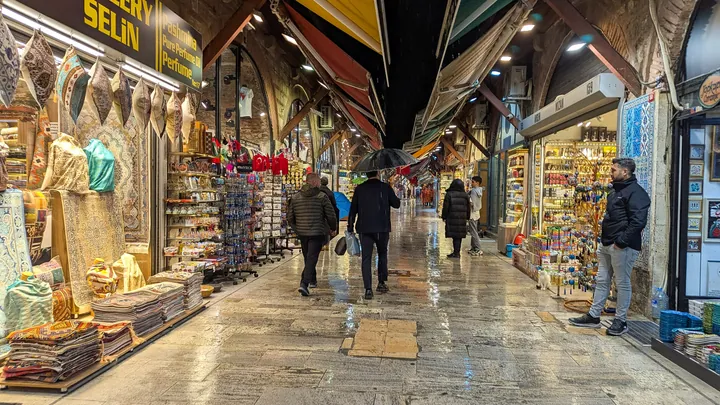
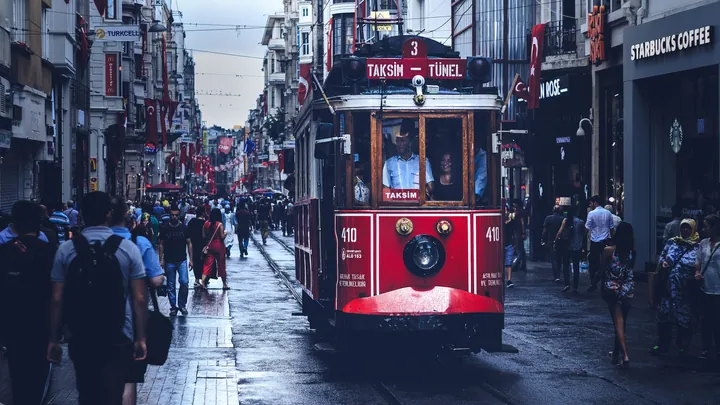
Keep an eye on bags and phones in crowded places: Istanbul's İstiklal Avenue, the Grand Bazaar, the Spice Bazaar, trams and ferries, and busy beaches. Use a cross-body bag and keep your phone out of back pockets.
Common scams
- The friendly bar invitation: in central Istanbul, a stranger strikes up a conversation and suggests a drink at a bar they know. The bill turns out to be enormous, and staff pressure you to pay. Choose your own bars, and check prices on the menu.
- The dropped shoe-shine brush: a shoe-shiner drops a brush, you pick it up, and in thanks they offer a "free" shine, then demand a high price.
- Taxi tricks: drivers who do not use the meter, take long routes, or quickly swap a large note you gave them for a smaller one and say you underpaid. Use the meter or a taxi app, say the value of the note as you hand it over, and keep small notes.
- Carpet and jewellery pressure: long, friendly sales pitches with tea that end with pressure to buy. Buy only if you want to, and get a receipt and certificate for expensive items.
- Fake e-Visa and rental websites: use only evisa.gov.tr for e-Visas, and never send a deposit for a flat you have not seen.
- Phone fraud: callers pretending to be police, prosecutors or bank staff who say your account is linked to a crime and ask you to transfer money or share a code. Real officials never do this. Hang up and call your bank.
- Card skimming: use ATMs inside banks where possible and cover the keypad.
Carry your ID
You are expected to carry identification at all times. Visitors should carry their passport, and residents their residence permit card. Police and gendarmerie carry out identity checks, especially in big cities.
Demonstrations and public order
Demonstrations and marches can be banned by provincial governors, and police may use tear gas and water cannon to disperse them. Avoid all demonstrations and large political gatherings. Foreigners who take part in unauthorised protests can be detained and deported. Be careful with social media posts too: insulting the President, the state, the flag or Atatürk is a crime, and posts by foreigners have led to prosecutions. Read culture and etiquette.
Terrorism and border areas
Terrorist attacks have happened in Türkiye in the past, including in Istanbul and Ankara. Security is visible at airports, metro stations, shopping centres and major sights, and bags are often X-rayed. Stay alert in crowded places and follow the instructions of security staff.
As of its update on 18 November 2026, the UK Foreign, Commonwealth and Development Office advised against all travel to within 10 kilometres of the Syrian border and warned about the risk of sudden regional escalation affecting flights and airspace. Other governments give similar advice. Check your own government's advice regularly, especially if you plan to travel in the southeast.
Women travellers
Many women travel and live alone in Türkiye without problems. Harassment, such as staring, comments or unwanted attention, does happen, mostly in crowded places and tourist areas.
- Dress like local women around you, especially outside big cities and resorts.
- On intercity buses, you will usually be seated next to another woman. Ask if you are not.
- Use licensed taxis or taxi apps at night, and share your journey with a friend.
- The Ministry of Interior's KADES app lets women send an emergency alert with their location to the police.
- Report harassment or assault to the police or call 112. Hotels and restaurant staff will usually help.
Wildfires and summer hazards
Wildfire season usually runs from about June to September, especially in the forests of the Aegean and Mediterranean coasts around Antalya, Muğla and Izmir. Fires spread fast in hot, windy weather.
- Never light fires, barbecues or throw cigarettes in or near forests. Entering some forests is banned during high-risk periods.
- Report any smoke or fire immediately to 112.
- Follow evacuation orders at once and keep a bag ready if you are staying in a forested area.
- Carry water and protect yourself from the sun during summer heatwaves.
At the beach and in the sea
Swim at beaches with lifeguards where you can, watch for warning flags, and take care with currents, especially on the Black Sea coast, where rip currents cause drownings every summer. Do not swim after drinking alcohol.
Floods and landslides
Heavy rain can cause flash floods and landslides, particularly in the Black Sea region and in cities in autumn. Follow MGM weather warnings at mgm.gov.tr.
Road safety
Traffic accidents are a much bigger risk than crime. Wear seatbelts in every seat, choose reputable bus companies, avoid driving at night on unfamiliar rural roads and allow extra time in winter. See driving and transport.
Help from your embassy or consulate
Embassies are in Ankara, and many countries also have consulates in Istanbul, Izmir and Antalya. Consulates can help if you lose your passport, are arrested, are seriously ill or are caught up in a disaster. They cannot pay your bills or get you out of prison. Before you travel, save your consulate's contact details from your government's official website and register with its travel registration service if it has one. Find more help in our directory and on the safety page.
Frequently asked questions
Is Türkiye safe for tourists?
Yes, for the vast majority of visitors. Take normal precautions against pickpockets and scams, avoid demonstrations, follow travel advice for border areas, and learn what to do in an earthquake.
What should I do first in an earthquake?
Drop, Cover, Hold On until the shaking stops, then leave carefully and go to your neighbourhood's assembly area. Find that area on e-Devlet before you need it.
Can I drink the tap water?
Municipal water is treated, but most residents drink bottled or filtered water, especially in older buildings with storage tanks. Visitors usually do the same.
Are taxis safe?
Generally yes. Use the meter or a taxi app, note the plate number, and be careful when handing over large notes.
What number do I call for the police?
Call 112. It covers police, gendarmerie, ambulance, fire and disaster response.
More questions
What is the working week in Türkiye?
Under Labour Law No. 4857 the normal maximum is 45 hours a week, usually spread over five or six days, and every worker gets at least 24 hours of uninterrupted rest a week. Overtime is paid at 150% of the normal hourly wage and is capped at 270 hours a year. Many offices work Monday to Friday, roughly 09:00 to 18:00, and public offices work Monday to Friday with a lunch break. Shops and shopping centres usually open seven days a week.
Do I need health insurance?
In practice, yes. A residence permit application needs health insurance that covers the whole permit period, either private cover or state cover through the Social Security Institution (SGK). Employees are covered by general health insurance (GSS) through their payroll contributions, and foreigners who have lived in Türkiye on a residence permit for more than a year and have no other cover generally have to join GSS and pay a monthly premium. State hospitals are good value, private hospitals are quicker, and visitors should travel with good travel insurance.
Daleel TR is a guide, not legal, financial or immigration advice. Rules change; confirm with the authority named before you act. Spotted an error? Tell us.