





Driving and Getting Around Türkiye
How to get around Türkiye: driving on a foreign licence and exchanging it, HGS toll tags, motorways and bridges, traffic rules and fines, bringing a foreign car, city transport cards, taxis, intercity buses, YHT high-speed trains and domestic flights.
Last reviewed 27 Nov 2026
Türkiye is a big country, roughly 1,600 kilometres from the Aegean coast to the eastern border, and it has a good mix of transport. Fast motorways link the main cities, high-speed trains connect Ankara, Istanbul and Konya, comfortable long-distance buses reach every town, and cheap domestic flights save days of travel. In the cities, metros, trams, ferries and buses are run by the municipalities and paid for with contactless cards.
This guide covers the main rules and options as of late 2026. Fares, tolls and fines rise every year, so check the current amounts with the operator before you travel.
Driving in Türkiye
Licences for visitors and residents
- Visitors: a valid foreign driving licence can generally be used for a limited period after entry, usually described as six months. Carry your passport with the entry stamp. If your licence is not in the Latin alphabet, carry an International Driving Permit or a notarised Turkish translation.
- Residents: once you live in Türkiye on a residence or work permit, you are expected to exchange your foreign licence for a Turkish one. Licences are issued by the Population and Citizenship Directorate (nüfus müdürlüğü). You book an appointment through e-Devlet or the directorate, bring your foreign licence with a notarised translation, a health report from a family doctor or hospital, photos and your residence permit, and pay the fees for the year.
Requirements can differ by the country that issued your licence and by licence class. Our driving licence checker summarises the main points.
Rules of the road
- Drive on the right and overtake on the left.
- Seatbelts are compulsory in all seats. Children should travel in suitable child seats, and young children must not sit in the front.
- Using a handheld phone while driving is banned.
- Headlights are required at night and in poor visibility.
- The blood alcohol limit for private car drivers is 0.5 grams per litre (0.5 promil). It is lower for commercial and professional drivers. The safest choice is not to drink at all.
- Carry your licence, the vehicle registration (ruhsat), the compulsory traffic insurance (trafik sigortası) and, if it is a rental car, the rental agreement.
- A warning triangle, first aid kit and fire extinguisher are required in cars.
Speed limits for cars
| Road type | Usual limit for cars |
|---|---|
| In towns and cities | 50 km/h |
| Two-lane intercity roads | 90 km/h |
| Divided highways | 110 km/h |
| Motorways (otoyol) | 120 km/h |
Signs can set lower limits, and limits for vans, buses and lorries are lower. Speed is checked by radar, average speed cameras on many highways and police patrols.
Traffic fines
Fines are set by the Highway Traffic Law (No. 2918) and revalued every year. If you pay a fine within 15 days of receiving it, you get a 25% discount. You can check and pay fines on e-Devlet, at tax offices and through banks. Our traffic fines tool lists common offences and the 2026 amounts.
Accidents
- If anyone is hurt, call 112 and do not move the vehicles unless they are a danger.
- For minor damage with no injuries, drivers can fill in a joint accident report (kaza tespit tutanağı) for the insurers, on paper or through the insurers' mobile app, and move the cars off the road.
- Photograph the scene, the plates and the other driver's licence and insurance.
Motorways, bridges and HGS
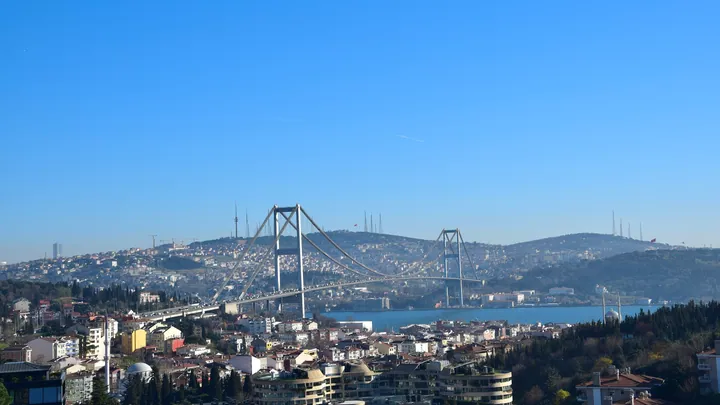
Many motorways, the Bosphorus bridges in Istanbul, the Eurasia Tunnel, the Osmangazi Bridge over the Gulf of İzmit and the 1915 Çanakkale Bridge over the Dardanelles are tolled. There are no cash booths: tolls are collected electronically through HGS (Hızlı Geçiş Sistemi).
- Buy an HGS tag at PTT post offices or through banks. In 2026 a sticker tag at PTT costs about ₺110, and a card type about ₺160.
- Stick the tag on the windscreen, link it to the vehicle and top up the balance online, through your bank or at PTT.
- Rental cars usually come with an HGS tag, and the rental company charges you for tolls later.
- If you pass a toll point without enough balance, it is recorded as a violating pass. Pay the toll within 15 days to avoid a penalty, which is a multiple of the original toll. You can check and pay on e-Devlet, at PTT or through the motorway operator.
Plan routes and costs with our fuel cost calculator. Fuel is sold by the litre, and prices change often with exchange rates and taxes.
Bringing a foreign car
- Visitors can bring a foreign-registered car into Türkiye temporarily. Customs records the car against the owner's passport, and the car must leave with the owner. Temporary import is usually limited to about six months; check the exact rules with the Ministry of Trade (gtb.gov.tr) before you travel.
- Residents with a permit can sometimes keep a foreign-registered car for longer, under strict conditions. A foreign-plated car cannot be sold, rented out or lent to a Turkish resident.
- From July 2026, a regulation on foreign-plated vehicles makes unpaid motorway and bridge tolls and related fines payable at the border, and vehicles with unpaid debts can be stopped from leaving.
- Permanent import of a car is costly, mainly because of the special consumption tax (ÖTV), and subject to age and emission rules. Most residents buy a car in Türkiye instead.
Public transport in cities
Each big city has its own contactless card, sold and topped up at kiosks and machines in stations, at kiosks and often through an app.
| City | Card | Main services |
|---|---|---|
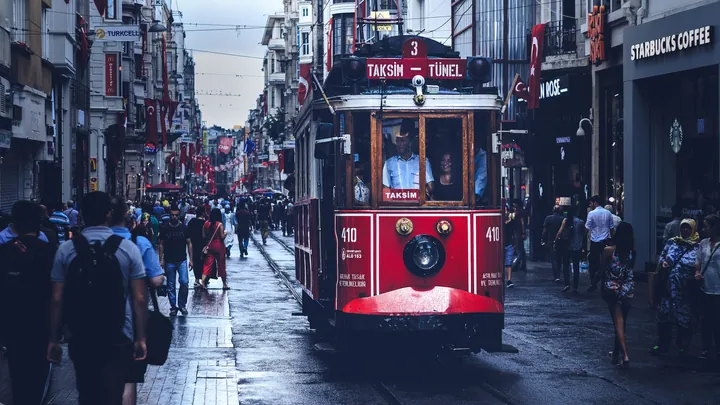
| Istanbul | Istanbulkart | Metro, Marmaray, Metrobus, trams, buses, ferries, funiculars |
| Ankara | AnkaraKart | Metro, Ankaray, EGO buses, Başkentray suburban trains |
| Izmir | İzmirim Kart | Metro, tram, İZBAN suburban trains, ESHOT buses, ferries |
| Antalya | Antalyakart | Tram lines and city buses |
| Bursa | BursaKart | Bursaray light metro, trams, buses |
| Trabzon | City card | Municipal buses; dolmuş minibuses are paid in cash or by card |
In Istanbul, one Istanbulkart can be used by more than one person on most lines, with a separate tap for each traveller. Students, teachers and people over 65 can apply for personalised discounted cards. Check current fares with our Istanbul transport fares tool.
Taxis and ride apps
- Taxis are yellow in most cities, with a meter (taksimetre). Ask for the meter to be switched on, and have small notes ready.
- Taxi-booking apps that use licensed yellow taxis are widely used in Istanbul and other cities.
- Dolmuş shared minibuses run fixed routes for a fixed fare and stop on request. They are cheap and useful in many towns.
Intercity buses
Long-distance coaches go almost everywhere, and they are comfortable, cheap and frequent. Buses leave from each city's main bus station (otogar), and you can book online or at the operator's desk. Many have seat-back screens, Wi-Fi and a steward who serves drinks and snacks. Overnight services, for example from Istanbul to Cappadocia, save a hotel night. When booking, a woman travelling alone is usually seated next to another woman.
Trains
The state operator TCDD Taşımacılık runs passenger trains, booked at ebilet.tcddtasimacilik.gov.tr, through the mobile app or at stations.
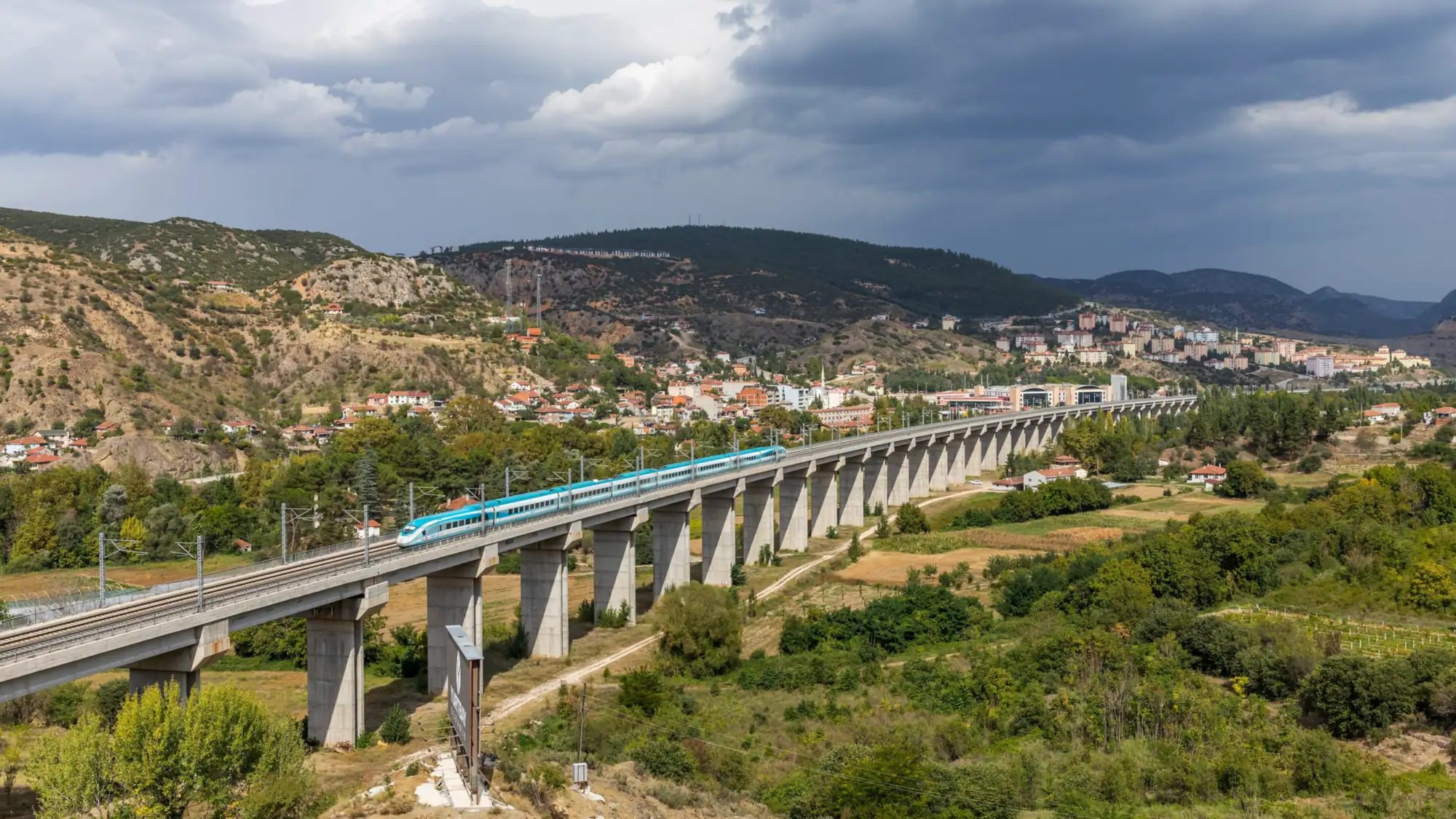
- YHT high-speed trains link Ankara with Istanbul, Eskişehir, Konya, Karaman and Sivas, and Istanbul with Konya. Ankara to Istanbul takes about four to five hours, depending on the service and the Istanbul station. Seats sell out on Fridays, Sundays and around holidays, so book early.
- Conventional and regional trains cover routes such as Izmir to Denizli and Ankara to Kars, including the Eastern Express (Doğu Ekspresi) and its popular tourist service.
- You need your passport number to buy tickets, and youth, senior and return discounts are available.
Domestic flights
Turkish Airlines, its low-cost brand AJet, Pegasus and SunExpress fly between dozens of cities. Istanbul has two airports, Istanbul Airport on the European side and Sabiha Gökçen on the Asian side, so check which one your flight uses. Domestic flights are often the fastest way to the east and to the Black Sea coast. Book early around bayram holidays, when prices rise; see our holidays page.
Frequently asked questions
Can I drive in Türkiye on my UK, EU or US licence?
As a visitor, generally yes, for a limited period after entry, usually six months. Residents are expected to exchange their licence for a Turkish one.
How do I pay motorway tolls in a rental car?
Rental cars normally have an HGS tag. The tolls are charged to the rental company, which bills you later. Ask how they charge before you leave the desk.
Is it safe to drive in Türkiye?
Main roads are generally good, but driving can be fast and assertive, especially in cities. Drive defensively, avoid night driving on mountain roads and in rural areas where you do not know the route, and expect snow in the east and the interior in winter.
Can I use one Istanbulkart for my family?
Yes, on most lines one card can pay for several passengers, with a separate tap for each.
What is the fastest way from Istanbul to Ankara?
The YHT high-speed train or a direct flight. The train takes about four to five hours and arrives in central Ankara.
More questions
Can I drive in Türkiye on my foreign licence?
Visitors can drive on a valid foreign licence for up to six months from their date of entry; an International Driving Permit helps if your licence is not in the Latin alphabet. If you live here longer, convert it to a Turkish licence at a civil registration office (nüfus müdürlüğü) by appointment through randevu.nvi.gov.tr. Türkiye drives on the right, motorways and the Bosphorus bridges are paid electronically with an HGS tag (rental cars usually have one), and seat belts are compulsory for everyone. The single emergency number is 112.
Daleel TR is a guide, not legal, financial or immigration advice. Rules change; confirm with the authority named before you act. Spotted an error? Tell us.